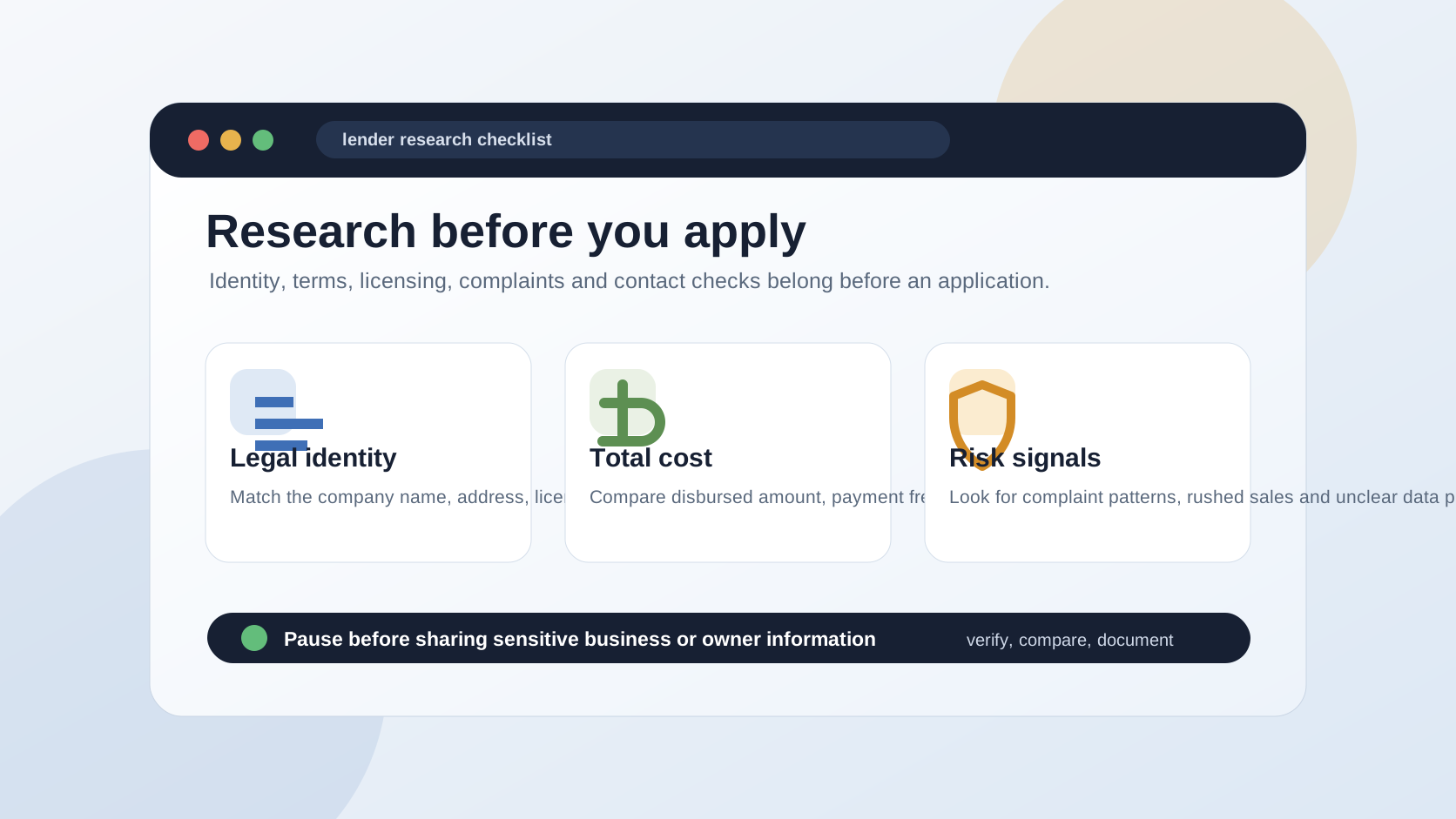
Start with the lender's legal identity
Online business lending can move quickly, but speed is not the same as trust. Before you begin an application, identify the exact company you are dealing with. Write down the legal name, trade name, website domain, physical address, support phone number, email domain and the name of any broker, marketplace or funding partner involved. If the brand says it is a marketplace rather than a direct lender, note that too. Your loan may ultimately come from a different company than the site where you first entered information.
Then look for consistency. Does the footer name match the privacy policy? Does the legal name match the contract template or application disclosure? Does the email address use the same domain as the website? Does the phone number appear on the site, in the application flow and in search results for the same company? Mismatches do not always prove fraud, especially when a lender has parent companies or affiliates, but they are a reason to slow down and ask for clarification in writing.
This is also where business owners should separate lender research from product research. A page can describe term loans, lines of credit, SBA loans, invoice financing or merchant cash advances in broad terms, but the company behind the page still needs its own review. Loanfy's borrower-experience content makes a similar point from the workflow side: clear intake and follow-up are useful only when the business understands who is collecting information and why. For background on that experience layer, see the online borrower experience guide.
Check licensing, registration and lender status where applicable
Business financing is not regulated in one simple national category. A bank, credit union, SBA-approved lender, online lender, broker, equipment finance company and merchant cash advance provider can fall under different rules. Some licensing requirements are state-specific, and some business-credit products may not appear in the same databases used for consumer loans. That means your research should start with the product, the state where your business operates and the legal entity offering the financing.
If a company claims to offer SBA financing, compare that claim with official SBA resources. The SBA Lender Match page explains that business owners can compare rates, terms, fees and other factors after being connected with interested lenders, and it also makes clear that matching is not a guarantee of approval or funding. That distinction matters. A legitimate referral or marketplace step is not the same thing as an approved loan.
For state-regulated financial services companies, search the lender's name in NMLS Consumer Access and with the banking or financial services regulator in your state. NMLS can be useful for mortgage, consumer finance, money services and other state-licensed financial-services records, but not every state agency or license type appears there. If you cannot find a record, do not assume the company is automatically illegitimate. Ask the lender which license or exemption applies, who regulates the product and where you can verify it.
Keep a screenshot or note of what you checked. If there is a later dispute about who contacted you, what was promised or which entity appeared in the application, a dated research trail is more useful than memory.
Read disclosures before comparing reviews
Reviews can tell you how borrowers felt. Disclosures tell you what the lender says the product may actually require. Start with the cost language on the lender's site and any offer documents available before signing. Look for the amount requested, amount deposited, origination or packaging fees, payment frequency, total repayment, term length, collateral, personal guarantee, prepayment rules, late fees and what happens if a payment is missed.
Payment frequency deserves special attention for small businesses. A monthly payment, weekly ACH debit and daily repayment structure can create very different cash-flow pressure even when the approved amount looks similar. Businesses with seasonal revenue, invoice delays or uneven card sales should model the payment against ordinary low weeks, not just strong months.
Also compare how the cost is presented. Some products use APR. Others use a factor rate, fixed fee or cents-on-the-dollar description. Those formats are not interchangeable. If the lender will not provide a clear explanation of total repayment, timing and fees, treat that as a decision signal. The FTC's small-business financing guidance advises owners to study an offer carefully, ask about personal guarantees and missed payments, and get unclear answers in writing before signing.
For a broader borrower-side comparison method, the loan offer comparison guide walks through payment, term, fees and flexibility. Business financing has its own legal and cash-flow details, but the discipline is similar: compare the whole structure, not just the most flattering headline.
Use reviews, complaints and community feedback carefully
Online reviews are useful when they reveal patterns. One angry review may reflect a misunderstanding, a bad fit or a real issue. Ten reviews describing the same surprise fee, repeated calls after opting out, unclear payoff process or funding delay deserve more attention. Read both positive and negative reviews for specifics. "Great service" is less useful than a review that names the application step, the timeline, the payment structure and how support handled a problem.
Check several surfaces rather than relying on a single rating. Look at the lender's own site, third-party review platforms, Better Business Bureau profiles where available, state regulator notices, litigation search results and the CFPB complaint process for covered consumer financial products and services. The CFPB complaint page is not a complete business-lending database, but it is still helpful context when an owner is personally guaranteeing debt, seeing related consumer-credit issues or trying to understand how complaint routing works.
Community threads can help you find questions other business owners are asking, especially about sales calls, document requests, payoff timing and whether a marketplace is a direct lender or broker. Treat those threads as informal peer discussion, not as proof. For example, an online community such as loans for small businesses may surface experiences and questions that help you decide what to verify next, but it is not a lender, regulator, credit adviser or endorsement source.
The strongest review signal is not volume alone. It is consistency across sources, connection to facts you can verify and relevance to your exact product. A complaint about a consumer installment loan may not map cleanly to a commercial line of credit. A review about a payment processor may not describe a separate lending product. Read for patterns, then return to documents and regulator records.
Protect business and owner data before applying
Business loan applications often ask for sensitive information: owner names, Social Security numbers, employer identification numbers, bank statements, tax returns, revenue data, merchant processing statements and online banking connections. Do not send that information just because a site looks professional or because a salesperson says funding is nearly guaranteed.
The FTC warns business owners not to click financing links in unsolicited emails and not to fill out an online application before determining who is receiving the information. That warning fits the current online-lending environment well. Some sites are direct lenders. Some are brokers. Some sell leads. Some are fraudulent. Your first screen should not be the only privacy review you do.
Before uploading documents, check whether the site uses HTTPS, whether the privacy policy says data may be shared with partners, whether you can contact a human through published channels and whether the company explains how bank-linking or document-upload tools work. If a salesperson asks you to send documents through a personal email address, text message or unfamiliar upload link, confirm the channel through the company's published phone number or support address first.
Owners should also be realistic about urgency. A business that needs funds quickly can still take 30 minutes to verify the company, read the core terms and ask one or two written questions. Pressure to skip those steps is itself useful information.
Make a documented yes, no or not-yet decision
Good lender research ends with a decision, not endless searching. Create a simple record for each lender or marketplace you are considering. Include the company name, product type, state or licensing notes, expected amount deposited, repayment amount, payment frequency, fees, collateral or guarantee language, complaint patterns, support channels and the reason you are comfortable continuing or walking away.
A "not yet" decision can be the best outcome when the business needs a clearer use of funds, updated financials or a less expensive option. The SBA notes that lenders commonly want a business plan, amount and use of funds, credit history, financial projections, collateral context and industry experience. Even if you are not applying for an SBA loan, that checklist is a useful readiness test before approaching any serious lender.
If you decide to continue, compare the financing against your actual operating rhythm. Will the payment leave enough room for payroll, rent, suppliers, taxes and slow collections? Does the use of funds have a measurable business purpose? Can the business handle repayment if revenue comes in below the optimistic case? Those are business planning questions, not just lending questions.
Loanfy is an informational lead-generation site focused on clearer borrower intake and digital lending workflows; it should not be treated as a claim that every product discussed here is offered by Loanfy. If you are comparing borrowing paths generally, start with the loan options overview. If your business has already defined the purpose, amount and timing of a financing request, the offer request form can help organize the details you are ready to share.
This article is general education for U.S. business owners and is not financial, legal, tax or credit advice. Business financing terms, licensing requirements, reporting options and approval decisions vary by product, state, lender and borrower profile. Review lender documents carefully and consider qualified professional advice before signing.
FAQ
How can I tell whether a business lender is legitimate?
Start by matching the lender's legal name, website, address, contact channels and licensing or registration record where applicable. Then compare written disclosures, complaint patterns and whether the lender gives clear answers before asking for sensitive information.
Should I trust online reviews of business lenders?
Reviews can reveal patterns, but they are not proof by themselves. Look for repeated issues across several sources, compare them with official disclosures and avoid treating anonymous comments as authoritative financial advice.
What fees should I compare before accepting business financing?
Compare origination fees, processing or packaging fees, late fees, returned-payment fees, prepayment rules, required collateral or guarantees, total repayment and payment frequency. The amount deposited into your account can differ from the approved amount.
Is this article financial advice?
No. This article is general education for U.S. business owners. Business financing decisions depend on your company, state rules, cash flow, documents and lender underwriting, so consider qualified financial, legal or tax advice for your situation.